Skip to content
Borders & Gates
All Case Studies
Case Study 01 · Technology

From manual ledgers to reporting on demand.

Borders & Gates replaced a manual, spreadsheet-driven finance function with a full Zoho Books implementation, accounting automation, and team training, moving Tanmia from retrospective reporting to real-time cloud accounting the team owns and runs itself.

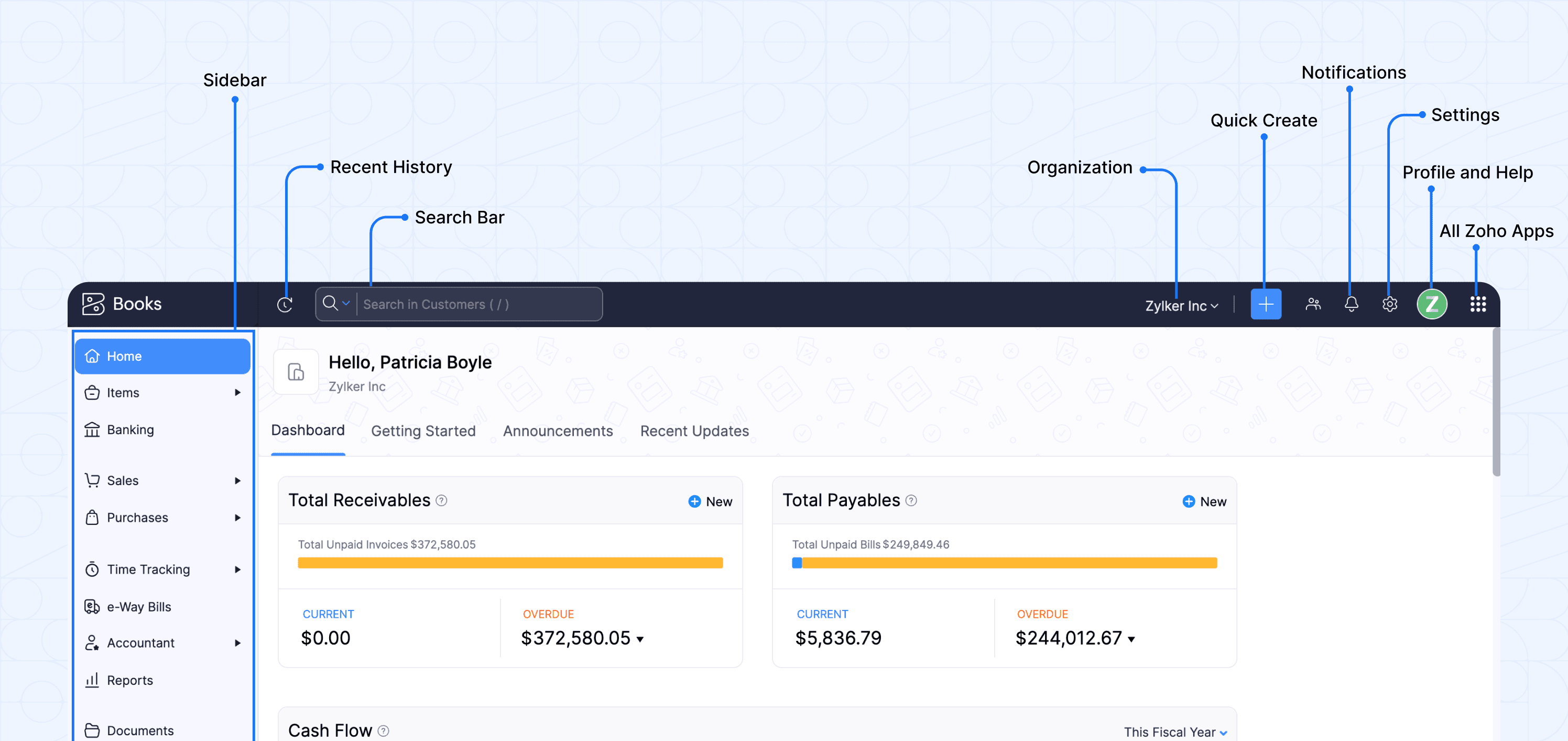
Zoho Books dashboard configured for Tanmia for Agricultural Investments
Client
Tanmia for Agricultural Investments
Sector
Agricultural investment
Capability
Technology
Services Delivered
  • Zoho Books implementation
  • Accounting automation
  • Team training
Illustrative Improvements
~60%

Shorter month-end close

~70%

Lower reconciliation effort

~90%

Fewer duplicate-entry discrepancies

CHALLENGE

Q1. Before the Zoho Books implementation, what did Tanmia’s day-to-day accounting and bookkeeping actually involve?

Before the Zoho Books implementation, Tanmia’s accounting was almost entirely manual. Invoices were created as standalone documents, expenses were logged outside the accounting system, and every bank transaction was matched against statements by hand. Because none of these steps were connected, the same figure was often re-entered two or three times before it reached a report.

Q2. Where did the manual accounting process create the most friction, especially around bank reconciliation?

The biggest friction was bank reconciliation. Matching transactions by hand meant working through every statement line by line each period, and any mismatch had to be traced backwards through source documents. Manual reconciliation was slow at the best of times and far slower whenever the numbers did not tie.

Q3. How did the lack of real-time financial reporting limit leadership’s visibility into the numbers?

Without real-time financial reporting, leadership only saw the numbers at period end. The profit and loss, balance sheet, and cash flow statement were rebuilt from scratch each time they were needed, so decisions were made against figures that were already weeks out of date.

Q4. How did manual data entry and duplicate records affect the accuracy of the financial statements?

Because data was re-entered in more than one place, duplicate records and small discrepancies appeared regularly. Each one had to be traced back through invoices and statements to find its source, and that manual verification consumed time that should have gone into financial analysis.

Q5. Why is accounting automation and a chart-of-accounts rebuild so hard for a finance team to take on alone?

Accounting automation is hard to take on internally because the day-to-day tasks feel familiar, so the underlying problem never looks urgent. Doing it properly means rebuilding the chart of accounts, migrating to a connected cloud accounting system, and changing daily workflows, which a finance team cannot do while still closing the month. That is the kind of Zoho Books implementation Borders & Gates is brought in to run.

Tanmia's Zoho Books invoices module in use
SOLUTION

Q1. Where did Borders & Gates start the Zoho Books implementation, and why begin with the chart of accounts?

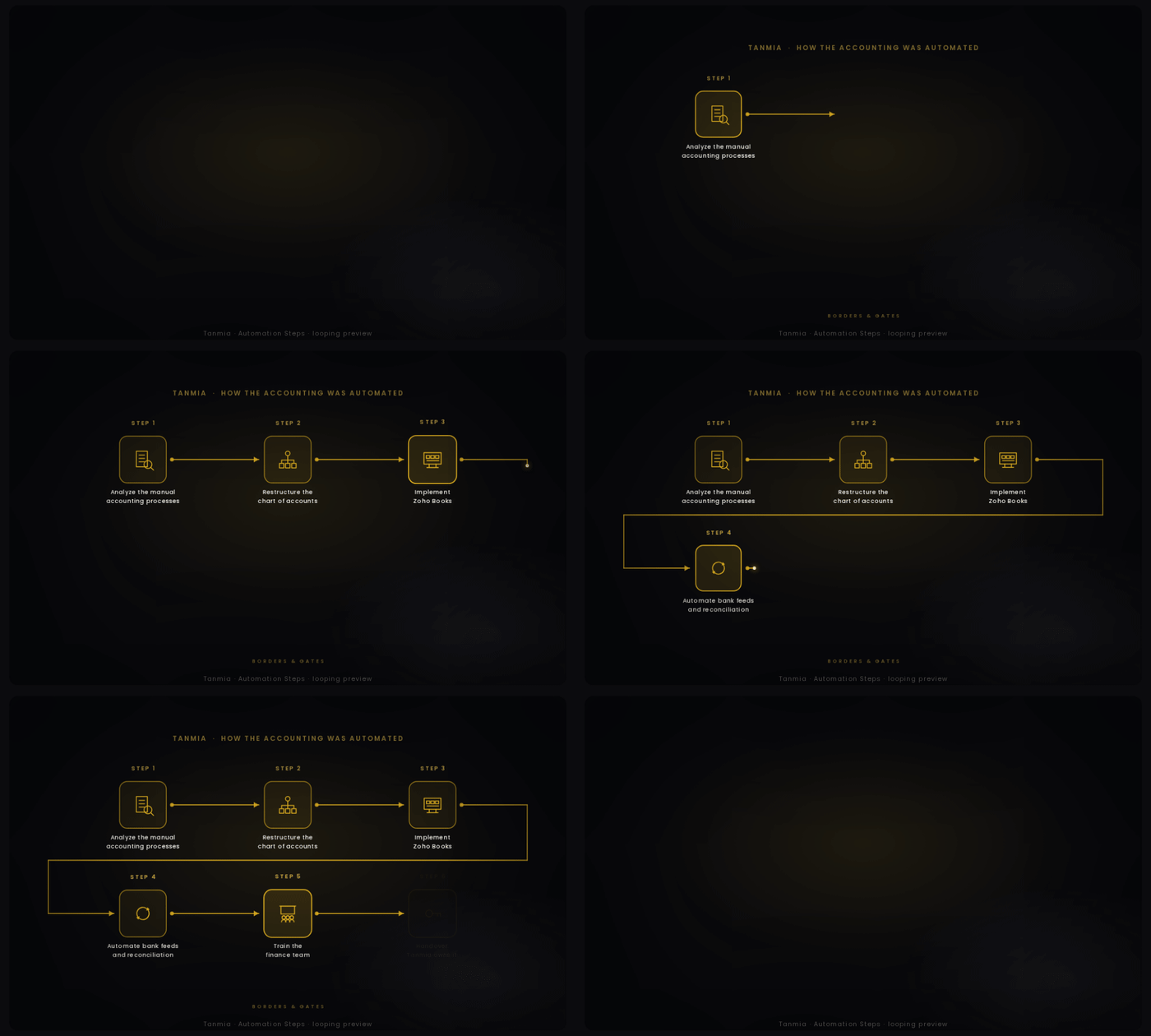
Borders & Gates started the Zoho Books implementation with the chart of accounts. Before automating anything, the account structure was configured around how Tanmia actually reports rather than a generic default, because accounting automation built on the wrong structure only produces wrong numbers faster.

Q2. What did the Borders & Gates cloud accounting and automation setup in Zoho Books actually include?

The Borders & Gates setup made Zoho Books the single source of truth for accounting: customised invoicing linked to payment tracking, expense capture moved inside the system, automated bank feeds that categorise transactions on arrival, and live financial statements delivered as real-time dashboards rather than manually assembled documents.

Q3. How did the Zoho Books automation solve the bank reconciliation problem specifically?

The Zoho Books automation replaced manual matching with automated transaction categorisation. Transactions arrive from the bank feed already classified by rules set during configuration, so bank reconciliation becomes a quick review of exceptions instead of a full line-by-line pass.

Q4. How did Borders & Gates train Tanmia’s finance team to own the Zoho Books system after go-live?

Borders & Gates built team training into the delivery. Tanmia’s finance team was taken through daily operation, the month-end close routine, and ongoing maintenance of the Zoho Books system, so full ownership sat with them at go-live rather than creating a permanent dependency on outside support.

Zoho Books automation steps configured for Tanmia
IMPACT REALISED / RESULT

Q1. How did accounting automation change Tanmia’s month-end close?

Accounting automation turned Tanmia’s month-end close from a rebuild into a review. With Zoho Books maintaining the financial statements continuously, closing a period is now a matter of checking and confirming figures rather than constructing them from source documents.

Q2. Where is the impact of automated reconciliation and invoicing most visible day to day?

The impact is clearest in automated reconciliation and invoicing. Transactions categorise themselves, so bank reconciliation is now exception handling, and invoices go out on a consistent cycle with live payment status visible against each one instead of being tracked separately.

Q3. How did real-time cloud accounting change financial decision-making for Tanmia’s leadership?

With real-time cloud accounting in Zoho Books, Tanmia’s current financial position is available on demand. Leadership now makes financial decisions against figures that reflect where the business stands today, not where it stood at the last close.

Q4. How did entering data once in Zoho Books improve financial accuracy and reduce errors?

Because data is entered once in Zoho Books and flows through rather than being re-keyed at each stage, the duplicate records that caused most discrepancies have largely been designed out. That means far less checking and less time spent tracing errors that should never have existed.

Q5. After the Borders & Gates engagement, how self-sufficient is Tanmia in running its Zoho Books accounting system?

Tanmia now runs its Zoho Books accounting system independently. Borders & Gates configured the cloud accounting platform and trained the finance team on it, so the client fully owns day-to-day operation with no ongoing dependency on outside bookkeeping.

Measurable improvement (illustrative)

Month-end close time reduced by around 60%, reconciliation effort down by around 70%, and duplicate-entry discrepancies reduced by around 90%.

Tanmia's live Zoho Books dashboard
ABOUT THE CASE

Suggested title: From manual ledgers to reporting on demand

Borders & Gates replaced a manual, spreadsheet-driven finance function with a full Zoho Books implementation, accounting automation, and team training, moving Tanmia from retrospective reporting to real-time cloud accounting the team owns and runs itself.

ABOUT THE CASE

From manual ledgers to reporting on demand

Borders & Gates replaced a manual, spreadsheet-driven finance function with a full Zoho Books implementation, accounting automation, and team training, moving Tanmia from retrospective reporting to real-time cloud accounting the team owns and runs itself.